Cheltenham Bournside School: A Smarter Retrofit for a Net Zero Future
Project Background
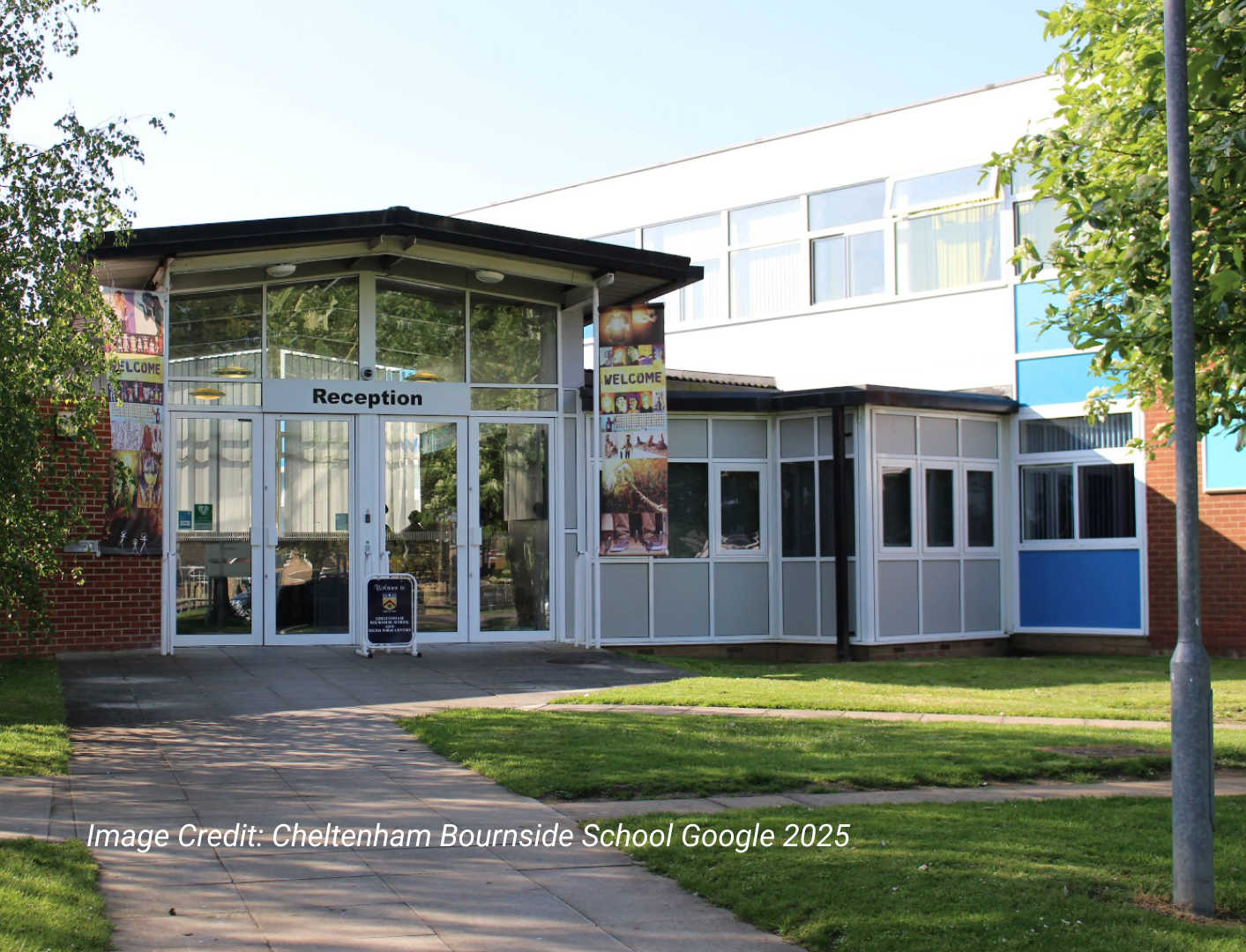
Cheltenham Bournside School is one of the largest secondary schools in Gloucestershire and now a trailblazer in large-scale school decarbonisation.
Delivered in partnership with Cotswold Energy and E3 Cube, this ambitious project integrates a ground source heat pump (GSHP) system enhanced by photovoltaic-thermal (PVT) solar panels: a powerful and industry-leading design combination.
With pressures mounting across the public sector to cut carbon, reduce operating costs, and comply with MEES and Net Zero targets, the school’s leadership saw this retrofit not just as an upgrade, but as a long-term investment in resilience, efficiency, and sustainability.
How We Got Involved
Genius Energy Lab was brought on board at RIBA Stage 3 by E3 Cube to conduct feasibility studies and deliver a performance specification. Following feasibility approval, we were novated to the appointed specialist contractor, Cotswold Energy, to carry out the full technical design at Stage 4.
Our involvement spanned from concept to completion, working alongside partners to de-risk delivery, align with funding requirements, and ensure the system met both performance and compliance targets. Our team supported stakeholder decision-making, advised on technical trade-offs, and led the innovation behind the PVT integration.
This scheme is one of several GSHP-led school retrofits now advancing in parallel with the DfE’s new-build programme, signalling a wider shift toward renewables in public buildings.
What We Delivered
At Cheltenham Bournside School, GEL designed a closed-loop ground source system integrated with 216 PVT panels installed across available roof space. These panels do double duty: generating electricity while pre-warming the ground loop fluid, dramatically improving system performance and reducing borehole demand. We would also expect the system to benefit from an approximate 25% increase in electrical gain due to panel cooling, as well as a considerable improvement in the longevity of the PV panels themselves.
Key elements of our delivery included:
- Full GSHP system design, including borehole layout, flow and return temperature specs, and anti-freeze calculations
- Innovative integration of 216 PVT panels, contributing 986,090 kWh of annual thermal energy
- Design modelling across three phases, covering a total annual heating load of over 1 million kWh
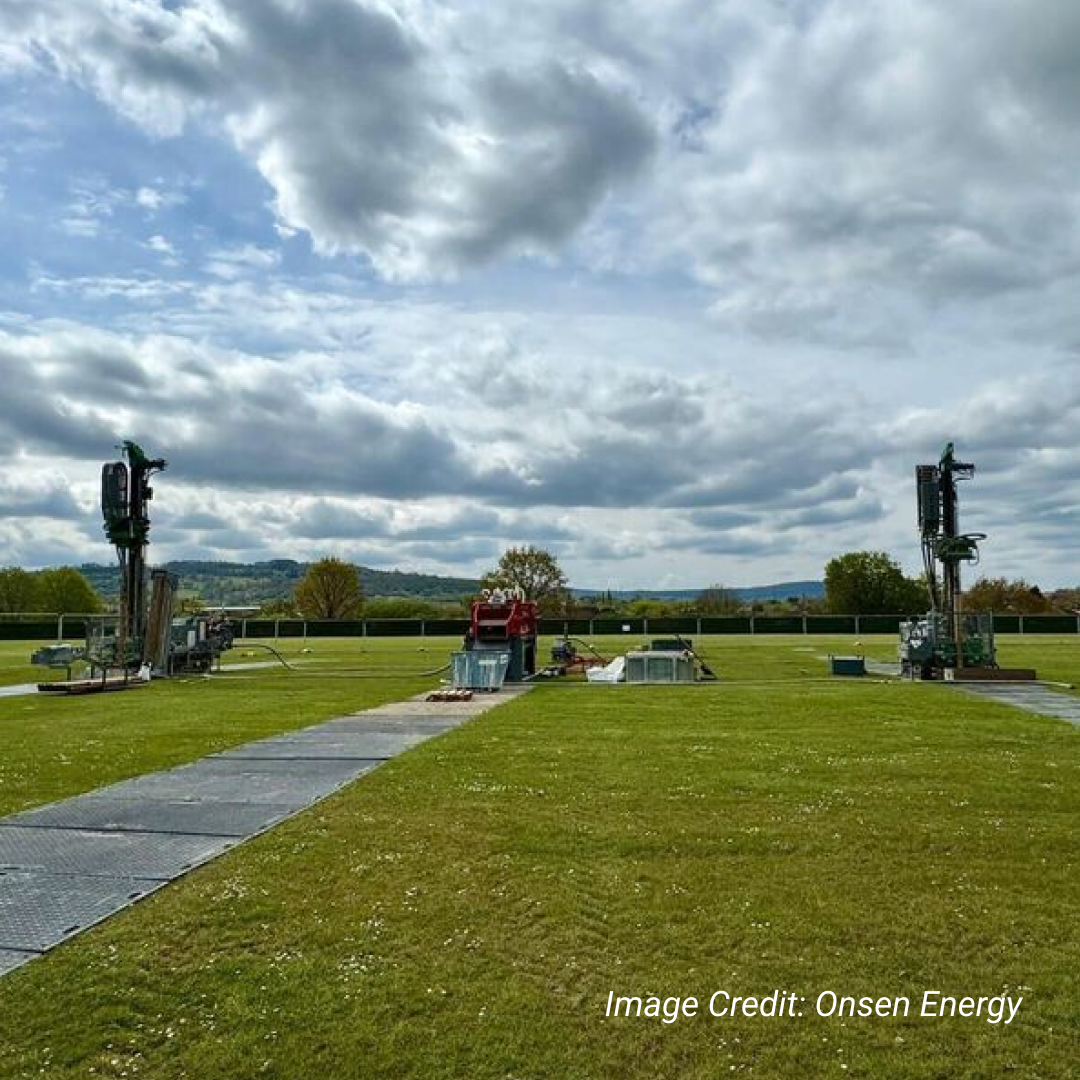
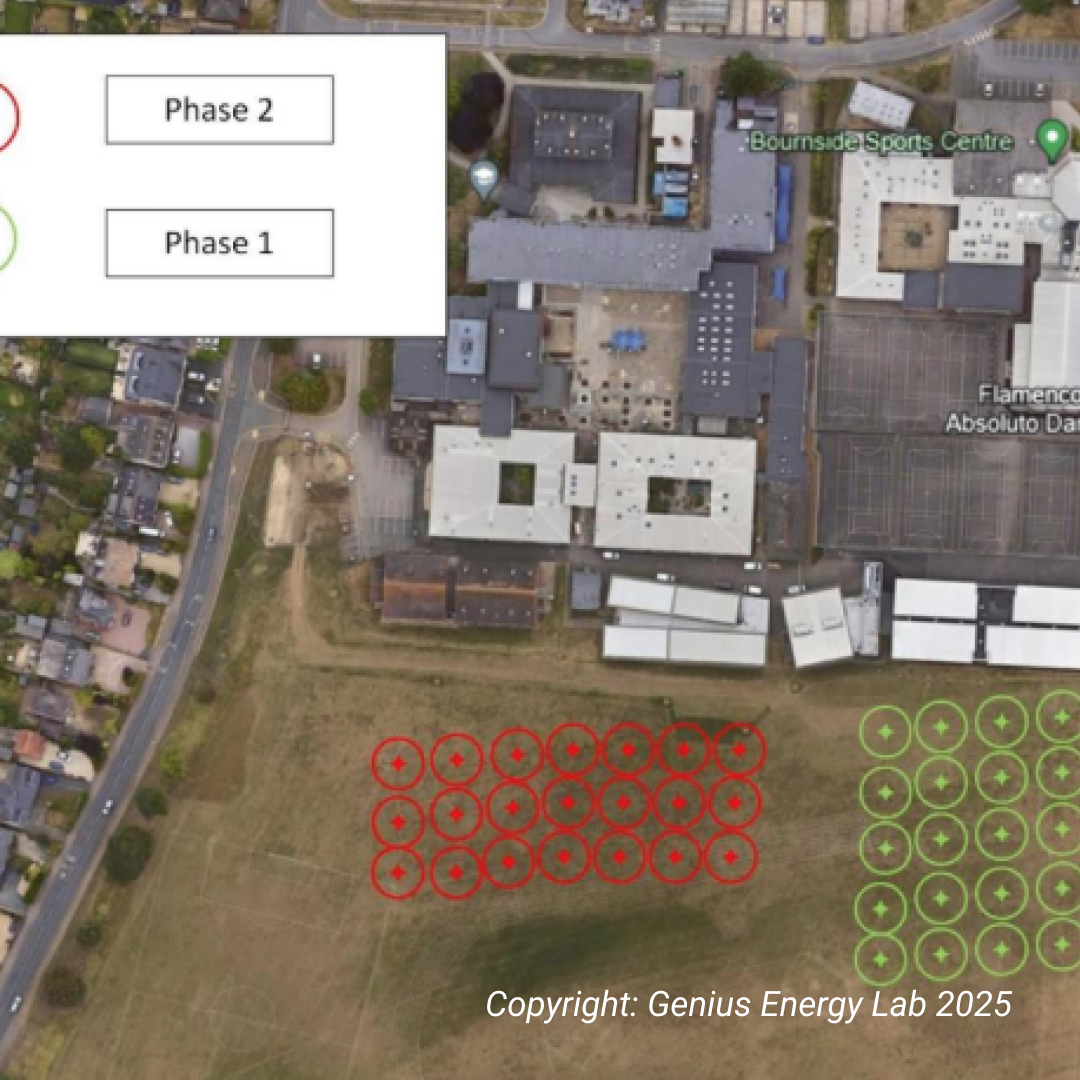
- Precise borehole strategy, with 64 boreholes drilled to depths of 155m across the first two phases - totalling 9,920 m linear metres of vertical drilling
- Flow temperature delivery of 55°C, demonstrating that high retrofit temperatures (e.g., 80–85°C) are not a necessity
By pre-heating the ground loop, the PVT system reduces the number of boreholes required, cuts installation costs, and unlocks higher seasonal efficiency, setting a new benchmark for retrofit viability in UK schools.
Retrofit Reality: Busting the Myths
This project pushes back against outdated assumptions in retrofit M&E:
“There’s no space for boreholes.”
Not true. Cheltenham Bournside had ample space in its playing fields, as many schools do.
“GSHPs can’t deliver high enough temperatures.”
This system reaches 55°C with ease, more than enough for most retrofit needs.
“The existing distribution system won’t cope.”
With the right design, challenges like pipe sizing and flow rates can be addressed through buffer vessels and strategic zoning.
“Air source is always simpler.”
Air source heat pumps may seem straightforward, but they often carry hidden drawbacks: noise, roof plant space, visual disruption, and poor cold-weather performance. This case study proves that when designed well, ground source delivers even in complex retrofit contexts.