
Could Your Data Centre Sell Digital Heat?
We Help Data Centres Generate Value from Digital Heat
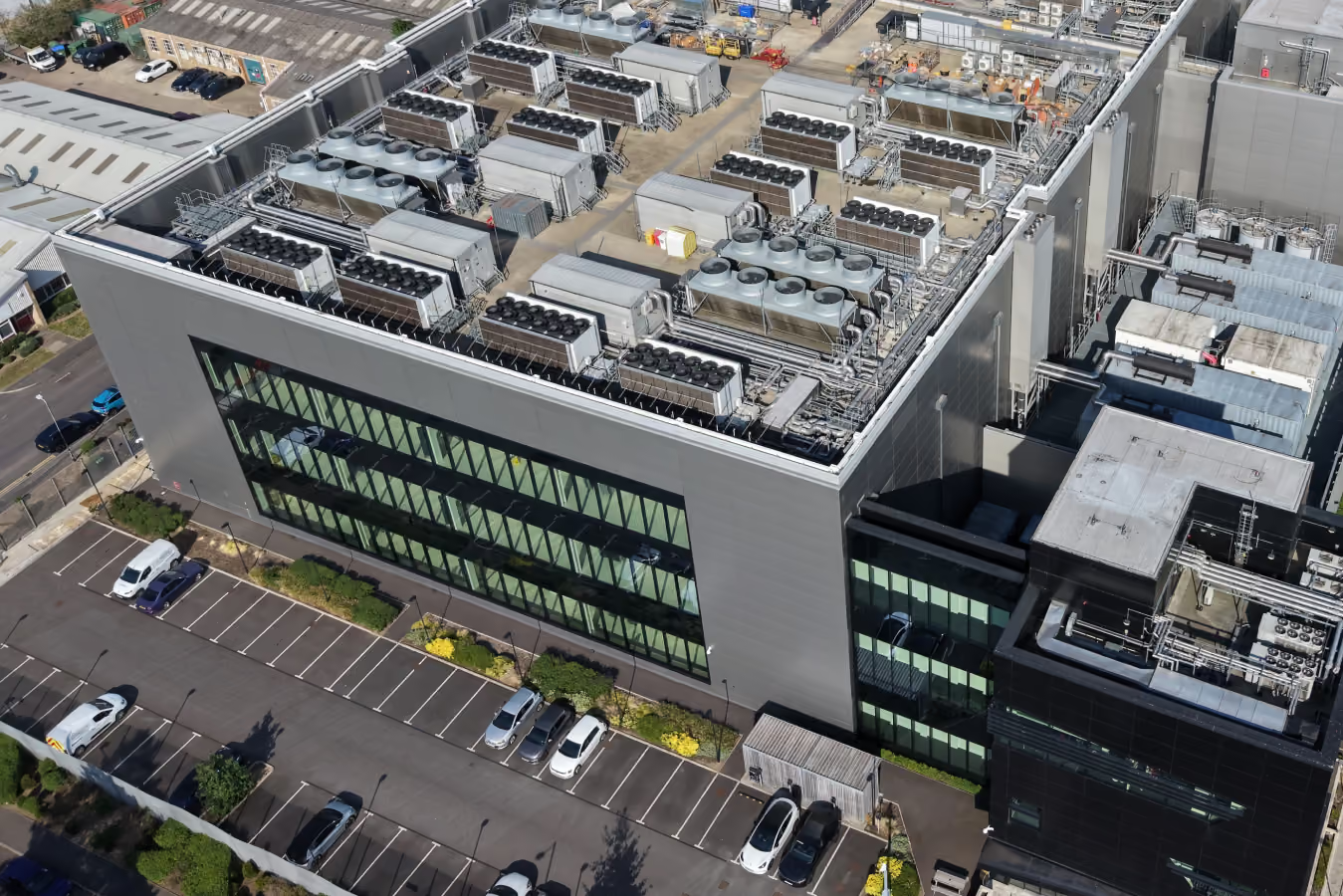
Data centres generate large quantities of heat, yet much of that thermal energy is still rejected as part of the cooling process. Across Europe, operators are increasingly exploring whether this heat can be recovered, transported and supplied to nearby homes, businesses and heat networks.
As rack densities increase and cooling demands grow, every megawatt of IT load creates a potential thermal resource. The question is no longer whether digital heat can be used. Increasingly, the question is whether a site has the technical, commercial and local infrastructure conditions needed to make heat recovery viable.
Selling Digital Heat Is Already Happening
The UK is already one of Europe's largest data centre markets, with almost 500 facilities in operation and continued growth driven by cloud computing, AI and digital infrastructure demand.
As capacity expands, so does the amount of heat being generated. Across Europe, operators are increasingly exploring how that heat can become part of local energy infrastructure rather than simply a cooling by-product.

Helsinki, Finland
Since 2010, waste heat from a data centre has been exported into Helsinki’s district heating network, helping heat homes and buildings across the city.

Paris, France
A 6.6 MW digital heat recovery scheme is helping provide heat for more than 1,000 homes, as well as the Olympic Aquatics Centre.

Amsterdam, Netherlands
Up to 25 MW of data-centre heat has been integrated into the city’s district heating infrastructure through a dedicated heat-recovery scheme.

Frankfurt, Germany
Data-centre waste heat is being recovered and supplied into a local heating network serving around 1,000 households.
Could Your Site Sell Digital Heat?
Not every data centre will have a viable heat export opportunity. Understanding that early is often the most valuable outcome.
An initial discussion with Genius Energy Lab can help identify:
Potential heat users near the site
Cooling and heat-recovery opportunities
The role of thermal storage and the ground
Infrastructure requirements
Commercial considerations
Whether further feasibility work is justified
Genius Energy Lab Is the Missing Link
Selling digital heat requires more than a possible buyer.
A viable heat-export strategy depends on understanding how the heat gets from one place to another, whether heat pumps are required, whether the ground can support cooling, thermal storage or balancing, what happens during summer operation, and whether the commercial case works across the full system.
Genius Energy Lab bridges the gap between data centres, heat users and thermal infrastructure. We help operators assess cooling, heat recovery, thermal storage and heat-export opportunities as one integrated system, turning waste heat from a cooling challenge into a potential energy asset.
Talk to our CTO about whether your site could support digital heat:

Common Questions About Digital Heat
Low-temperature heat is often recoverable. Modern heat-pump systems can upgrade low-grade heat to temperatures suitable for homes, buildings and heat networks. The key question is not temperature alone, but whether the wider technical and commercial conditions make heat recovery viable.
Not necessarily. Heat can often be transported over meaningful distances where the infrastructure and economics support it. The more important question is whether a viable route exists between the heat source and heat demand.
Not when systems are designed properly. Ground cooling, thermal storage and heat recovery can be modelled and managed over decades as part of a long-term thermal strategy.
Buildings still require domestic hot water throughout the year. Where heat demand is lower, ground cooling and thermal storage strategies and alternative heat users can help maintain value from recovered heat outside the traditional heating season.