Heat Network Zoning Explained: What Developers and Local Authorities Need to Know in 2026
%20(1).png)
The UK’s approach to decarbonising heat is entering a more structured phase. Alongside the continued rollout of heat pumps and building efficiency measures, government policy is increasingly focused on district heat networks as a key part of the national energy system.
This shift is being driven not only by climate policy, but also by the need to strengthen long-term energy resilience. As geopolitical tensions, volatile gas markets and energy security concerns shape national infrastructure planning, attention is turning to heating systems that can draw on local and low-carbon energy sources at scale.
The January 2026 government response to the Heat Network Zoning consultation confirmed how this transition will take shape in practice. Heat networks will be planned through designated geographic zones where shared infrastructure is expected to deliver the most efficient and cost-effective low-carbon heating solution.
For developers, designers, and local authorities, heat zoning introduces a new layer of strategic planning. Heating decisions will increasingly be influenced by whether a site sits within a designated zone and how that zone’s network infrastructure will be delivered.
Understanding how heat zoning works, and what it means for project planning and energy system design, is becoming essential.
What Is Heat Network Zoning?
Heat network zoning is a policy framework that identifies areas where district heating infrastructure is expected to provide the most effective long-term solution for low-carbon heat.
Rather than leaving heating strategies entirely to individual developments, zoning introduces a coordinated approach. Areas with high heat demand, dense building clusters, or access to recoverable heat sources are identified and prioritised for heat network deployment.
Within a zone, a single network developer will typically be appointed to design, finance, build and operate the system. Buildings located within that zone may then connect to the network where it is determined to be the most appropriate heating option.
This framework allows heat infrastructure to be planned in the same way as other major utilities, enabling coordinated planning of long-term energy infrastructure across entire districts or cities.
Why Now? Rebalancing the UK’s Heating Model
The UK’s heating system reflects decisions made several decades ago.
During the 1960s and 1970s, the discovery of North Sea gas enabled the rapid rollout of a national gas grid. Homes, commercial buildings and public estates were progressively converted to gas boilers, creating the decentralised heating model that still dominates today.
This approach delivered affordable and reliable heat for many years, but it also meant that large-scale district heating infrastructure never developed in the way it did across parts of Northern Europe.
Countries such as Sweden followed a different trajectory. The oil shocks of the 1970s prompted a national shift toward energy resilience. Municipal district heating networks were expanded across cities, allowing communities to use a mix of energy sources including waste heat, biomass, geothermal energy and large heat pumps.
Today, district heating supplies the majority of space heating in many Swedish cities and provides a clear proof point that heat networks can work at scale.
Heat Networks: UK vs Sweden
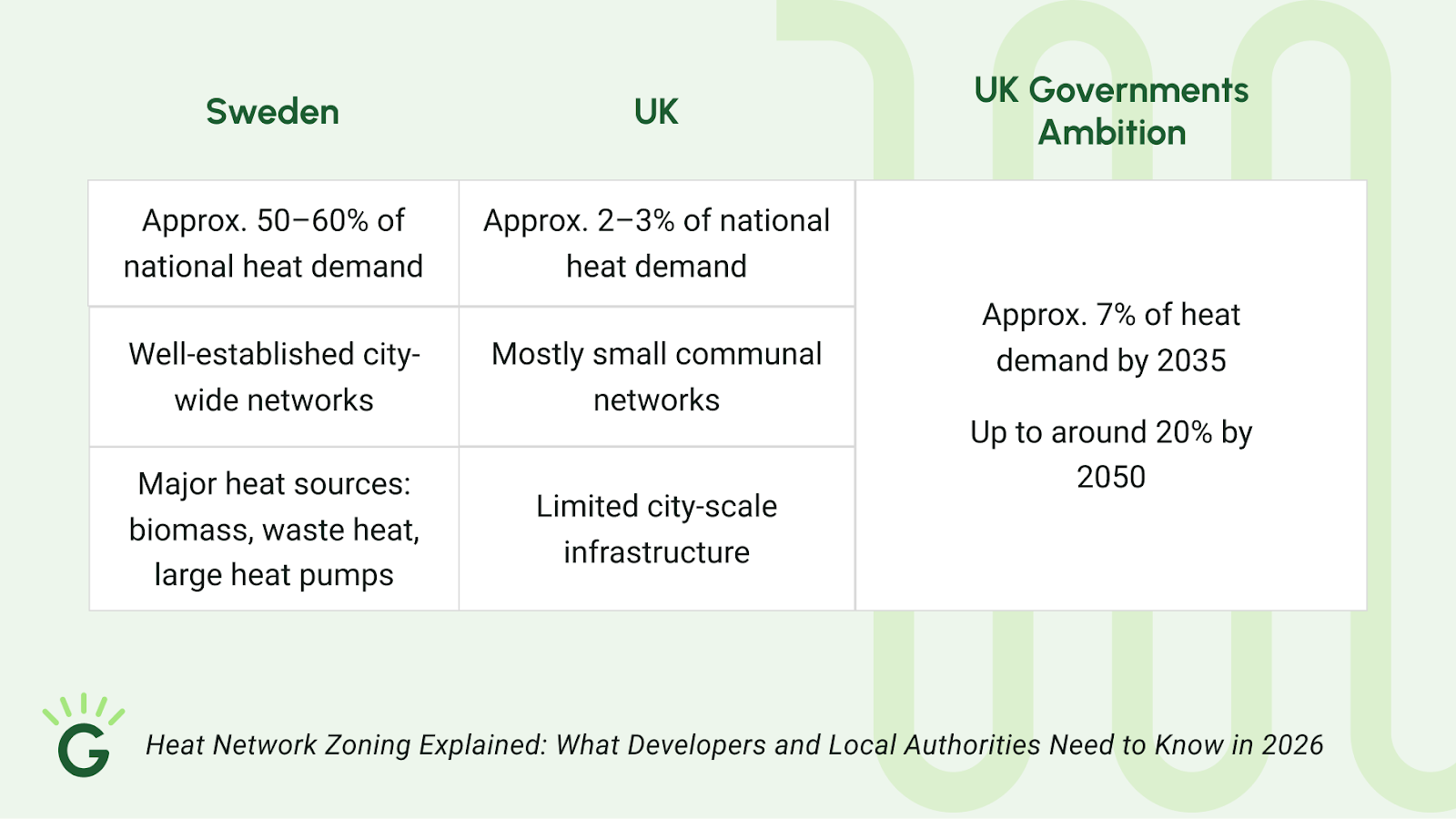
The UK now faces a different but equally strategic moment. Energy security, decarbonisation and the stability of long-term energy supply have become central national priorities. Rising geopolitical tensions, fluctuating global energy markets and the need to reduce reliance on imported fossil fuels have reinforced the importance of building resilient domestic energy systems.
Heat networks form part of this transition.
By enabling multiple buildings to share low-carbon heat sources, district networks allow cities to make use of local resources such as ground source energy, recovered industrial heat and large-scale heat pump systems. They also create infrastructure that can evolve over time as new technologies and heat sources emerge.
Heat network zoning therefore, represents an important step toward rebalancing the UK’s heating system, moving from a purely building-level approach toward coordinated energy infrastructure at district scale, which is secure and home-grown.
For planners, developers and designers, this shift means that heating strategies will increasingly be shaped by how buildings interact with wider energy systems rather than being determined solely at the building level.
How Heat Network Zones Will Be Delivered
The government response outlines a two-tier governance model for heat zoning.
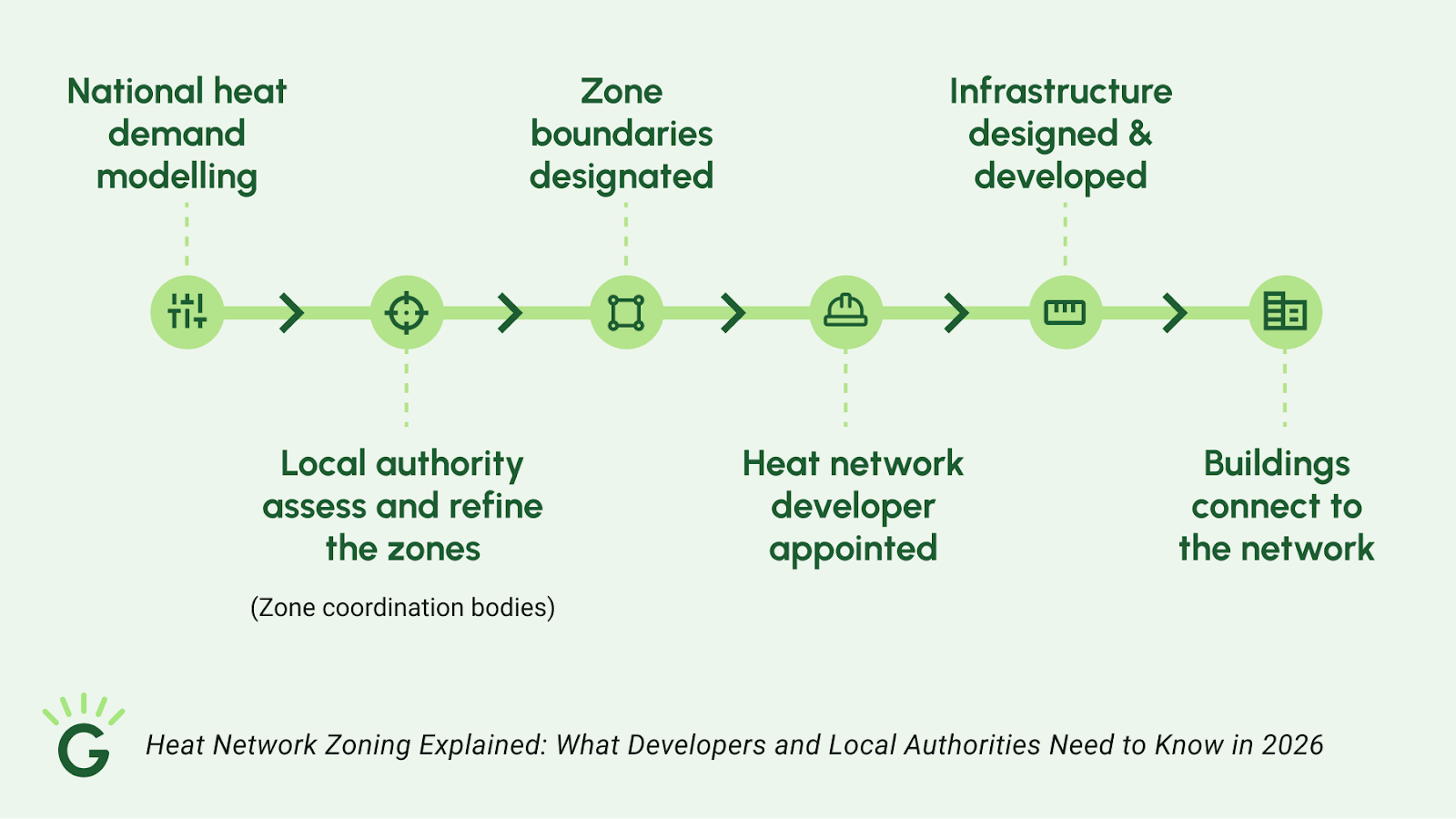
At the national level, a Heat Network Zoning Authority will oversee the policy framework, develop the methodology used to identify potential zones, and maintain the national data platform used to support zoning decisions.
At the local level, Zone Coordination Bodies will manage the designation and delivery of individual zones. In most cases, these bodies are expected to be local authorities or combined authorities.
Their responsibilities will include:
- Analysing local heat demand and infrastructure opportunities
- Defining zone boundaries
- Consulting with stakeholders
- Running procurement processes to appoint heat network developers
- Overseeing connection strategies and network rollout
This structure places local authorities at the centre of heat network delivery while providing national coordination and policy consistency.
While the details vary by location, the process generally follows the sequence below.
What the 2026 Government Response Confirmed
The January 2026 response clarified several aspects of the heat zoning framework that are particularly relevant for project teams and planners.
Heat networks are expected to grow significantly
Government policy now anticipates that heat networks will supply a substantially larger share of UK heat demand in the coming decades. The current ambition is to expand heat networks to deliver around 7% of heat demand by 2035, with further growth expected thereafter.
Zoning provides the planning framework required to reach this scale of deployment.
Competitive procurement will appoint network developers
Within each designated zone, a competitive process will be used to appoint a single heat network developer responsible for delivering the infrastructure.
Developers will be assessed on technical capability, delivery plans, cost structures and long-term operational performance.
Providing a defined service area and long-term demand visibility is intended to reduce investment risk and support large-scale infrastructure delivery.
Connection requirements may apply
One of the most important practical implications is the introduction of connection requirements for certain buildings located within a zone.
Where a heat network has been identified as the most efficient heating solution for the area, some developments or buildings may be required to connect to the network.
This mechanism is designed to ensure sufficient demand exists to support the viability of the network.
Carbon standards will apply to networks
The government has also confirmed that heat networks will need to meet carbon emissions limits from 2030 onwards, ensuring that networks contribute meaningfully to national decarbonisation goals.
This requirement will encourage the use of low-carbon heat sources such as heat pumps, geothermal energy and recovered waste heat.
What Heat Zoning Means for Developers
For developers, heat zoning introduces a new strategic consideration when planning heating systems for both new build and major retrofit projects.
The heating strategy for a development will increasingly need to account for whether the site falls within a designated zone or is expected to do so in the near future.
Developments within a heat network zone may connect directly to a district system rather than installing an individual heating plant, while projects outside zones may pursue building-level low-carbon solutions.
Early engagement with zoning plans will therefore become an important part of development strategy.
What It Means for Designers and Engineers
For designers and engineering teams, heat zoning reinforces the need to consider system design at both building and district scale.
Network infrastructure introduces new design considerations, including:
- network temperatures and system compatibility
- heat source selection
- integration with existing building systems
- long-term network expansion potential.
District networks also create opportunities to deploy large-scale heat pump systems, ground source infrastructure, and heat recovery technologies that can serve multiple buildings simultaneously.
Design teams will increasingly be involved in shaping how individual buildings integrate with wider energy infrastructure.
How Ground Source Systems Support Heat Network Zones
Ground source heat pumps are expected to play an important role in many heat network zones.
The stable temperatures available within the ground allow heat pumps to operate with high efficiency throughout the year, supporting both heating and cooling requirements while maintaining predictable performance.
When deployed at district scale, ground source systems can form the backbone of low-carbon heat networks, providing consistent heat input while enabling the recovery and redistribution of heat between buildings.
In dense urban environments and large estates, shared ground infrastructure can support multiple buildings while reducing reliance on fossil fuel heating systems.
For this reason, ground source systems are increasingly being considered alongside other low-carbon heat sources during the early feasibility stages of heat network planning.
Planning for the UK’s Zoned Heating Future
Heat zoning represents a shift in how the UK approaches heating - toward coordinated heat infrastructure planning across cities and regions.
For several decades, heating strategies have largely been determined at the level of individual buildings. The emerging policy framework introduces a more coordinated model in which cities and regions plan shared energy systems that serve multiple developments over the long term.
This approach requires early collaboration between planners, developers, engineers and infrastructure providers. Heating solutions must be considered alongside wider questions of urban energy systems, local heat sources and long-term network expansion.
Understanding how low-carbon heating technologies can integrate into district networks will also become a key part of long-term project design.
As zoning policy moves from consultation to implementation, the organisations that engage with these frameworks early will be best positioned to deliver projects that align with the UK’s evolving low-carbon heat system.
We support projects with GSHP design expertise that is independent of installation and grounded in public sector delivery experience. We work alongside contractors, consultants and estates teams to help make GSHP systems predictable, efficient and fit for purpose.
The earlier those conversations happen, the fewer surprises teams face later.
Book a Lunch & Learn - an informal call with our technical team - to align your team on early-stage GSHP system considerations for your projects.

Insights from the GSHP experts
Catch up with our latest news and explore our industry knowledge