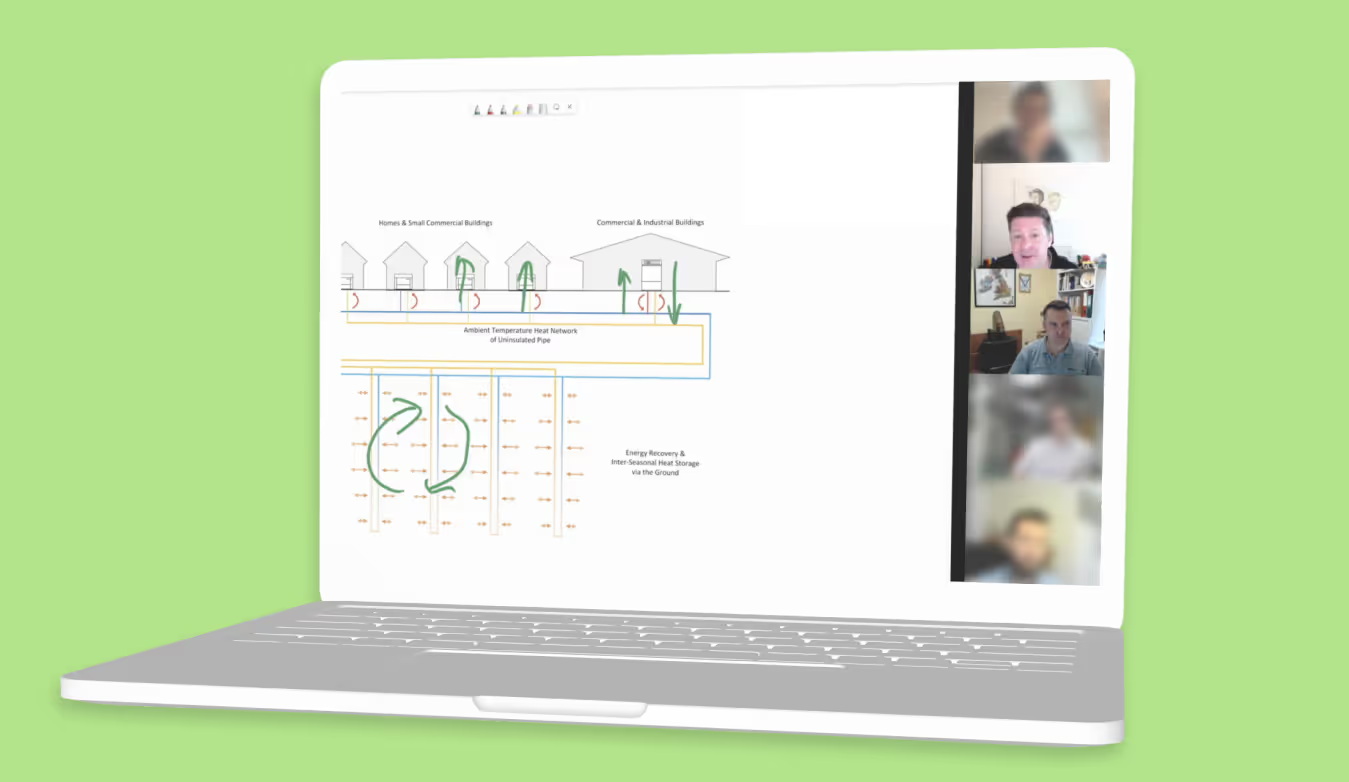
GSHP for New Build Residential Developments & Estates
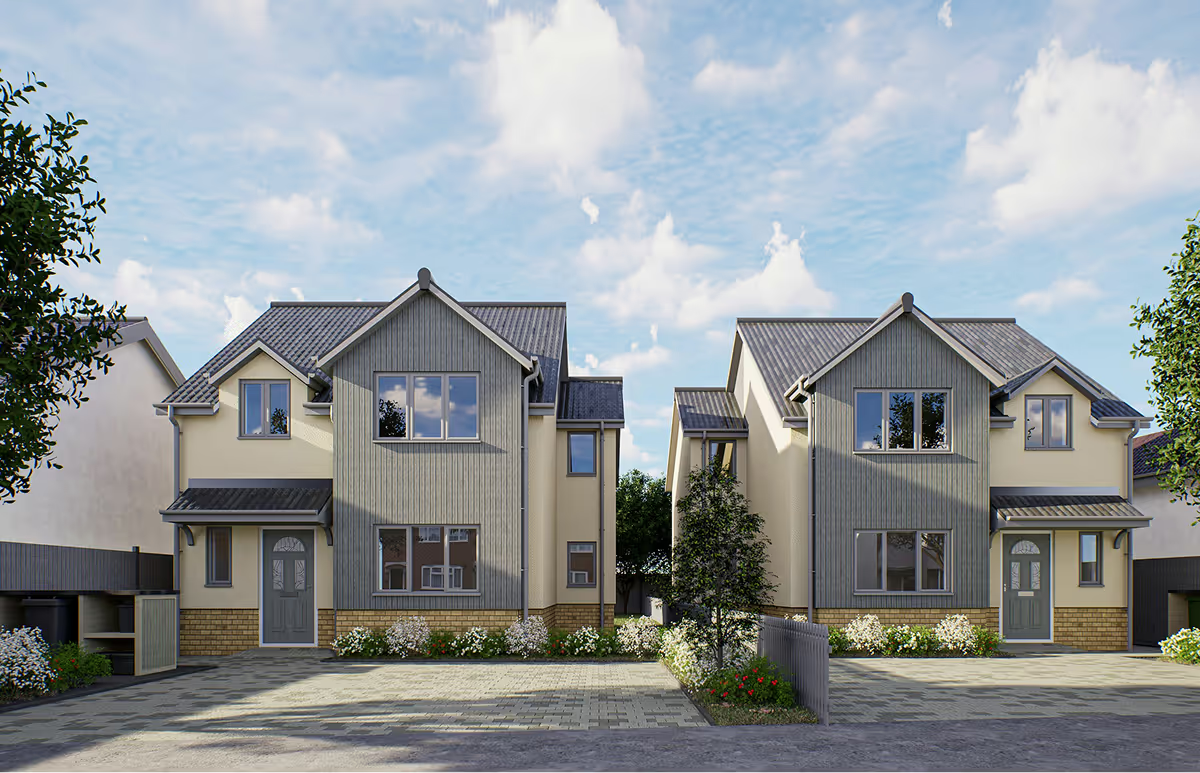
Designing ground source heat pump systems for new build housing developments
If you're a developer, local authority, or consultant planning a new residential scheme, heating strategy is no longer a late-stage decision.
Regulation, planning scrutiny, and long-term performance expectations are all moving in the same direction - towards low-carbon systems that can scale. The Future Homes Standard will require fossil-fuel-free heating across new homes, with changes already influencing planning decisions today. At the same time, heat pump deployment is accelerating rapidly, increasing pressure on delivery at scale.
Planning authorities are also placing greater emphasis on carbon performance, noise, visual impact, and long-term system viability.
For developers, this creates a clear challenge. Heating systems must meet compliance requirements while remaining commercially viable, deliverable within programme, and reliable over decades of operation. The risk is not just upfront - underperforming systems can create long-term liabilities, from resident dissatisfaction to reputational damage.
Ground source heat pump (GSHP) systems - particularly ambient loop and shared ground loop networks - offer a scalable, future-ready solution. But their success depends on one thing: getting the design right from the start.
De-risking low-carbon heating for new build developments
Cost certainty
Whole-life modelling, transparent drill allowances, and sensitivity analysis provide clear, defensible cost positions from the outset.
Reducing ground risk
Desktop geology and targeted investigation reduce uncertainty - avoiding unnecessary test boreholes and overdesign.
Planning and compliance
Robust carbon modelling and early alignment with heat network zoning ensure schemes meet evolving requirements.
Programme control
Early-stage involvement (RIBA 0–2) and integration with civil and foundation design keep delivery on track.
Our role: expert GSHP design from the earliest stages
Genius Energy Lab is a design-only GSHP consultancy, working with developers from the earliest stages of a project - before key decisions are fixed and risk is locked in.
We support projects from RIBA Stage 0–4, embedding technical expertise early to shape systems that are feasible, compliant, and built to perform.
Early involvement allows us to:
- Define site-specific GSHP strategies that are feasible and scalable
- Control costs and avoid late-stage redesign
- Optimise system performance across the whole development
- De-risk procurement, delivery, and long-term operation
With £10m professional indemnity cover, in-house geologists, and PhD-level engineers, we bring the technical depth and assurance required for large-scale residential schemes.

Case Study
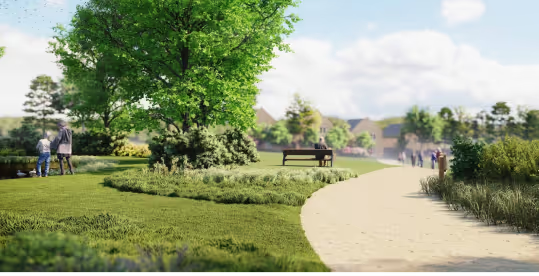
One Horton Heath, Eastleigh Borough
One Horton Heath is one of the UK’s most ambitious ambient loop residential developments, demonstrating how GSHP systems can be delivered at scale.
The scheme features an ambient loop distributed GSHP system, with 383 homes in the initial phase and around 2,500 planned overall. At the time of design, it was among the largest ambient loop systems globally.
Our role focused on early-stage system design, setting the foundation for a phased, infrastructure-led approach to heating. The system was designed to expand in line with the development, avoiding rework and supporting efficient delivery across multiple phases.
By treating the ground array as long-term energy infrastructure, the project supports significant carbon reduction while improving long-term affordability for residents through efficient, stable system performance.
Why ground source for new build estates?
Ground source heat pump systems are built for scale. For new build housing, they deliver the performance, consistency, and infrastructure longevity other systems struggle to match.
GSHP systems achieve seasonal COPs of around 4 in UK conditions - roughly double that of air source. The result is lower operating costs and more stable performance across an estate.
Shared ground loops and ambient networks are ideal for:
- Large phased schemes
- High-density sites
- Mixed-tenure developments
- Planning-sensitive locations
Ambient loop and 5th generation networks are being embedded into UK heat strategy, particularly as heat network zoning is introduced.
The ground array lasts over 100 years: delivering long-term energy infrastructure that can be owned, financed, and operated as a utility asset.
With 7% of UK heat demand (27TWh) targeted from networks by 2035, GSHP systems position developments to connect, comply, and scale.
How Genius Energy Lab supports new build projects
We support developers and design teams with end-to-end GSHP system design - from early feasibility through to technical delivery.
- Closed loop, open loop, and hybrid system expertise
- In-house modelling software to optimise performance and cost
- Support across all RIBA stages, from feasibility to technical design
- Feasibility studies and option appraisals to guide early decisions
- Ground and hydrogeology assessments to reduce subsurface risk
- Borehole layout, depth, and drilling methodology defined upfront
- Technical documentation to support procurement and compliance
Lunch & Learn Webinars: Ground Source Heat Pump Systems Explained
Join Genius Energy Lab for an informal, expert-led webinar designed to demystify GSHP systems and show how they can benefit your next project.
Online • 60 mins